
IRS Data Studies
IRS FY2025 Audit Enforcement Statistics: 497,621 Audits, $26.8 Billion Recommended (2026 Data Study)
What this episode covers
- What is an IRS CP2000 notice from the Automated Underreporter program?
- What happens if the IRS files a substitute for return when I don't file?
- What do IRS transcript codes 420, 424, 570, 922, and 290 mean?
- What payment options does the IRS offer for an assessed tax balance?
The short answer on IRS FY2025 audit enforcement statistics: the IRS closed 497,621 audits in FY2025, recommending $26.8 billion in additional tax. Its automated programs reached far more people — the Automated Underreporter (CP2000) program closed 987,460 cases with $5.9 billion in assessments, and Automated Substitute for Return closed 592,773 cases worth nearly $2.9 billion.
You probably didn't search for federal enforcement data out of curiosity — either an IRS letter just landed on your kitchen table, or you're trying to figure out how likely one is. Either way, the FY2025 numbers tell you something most audit articles miss: the biggest enforcement risk in 2026 isn't a human auditor. It's a computer.
This data study breaks down every enforcement figure the IRS published for fiscal year 2025 — audits, automated underreporter matches, and substitute returns — and translates each one into what it means for the person holding the notice. The image below puts the three programs side by side so you can see at a glance which part of the enforcement machine is most likely writing to you.
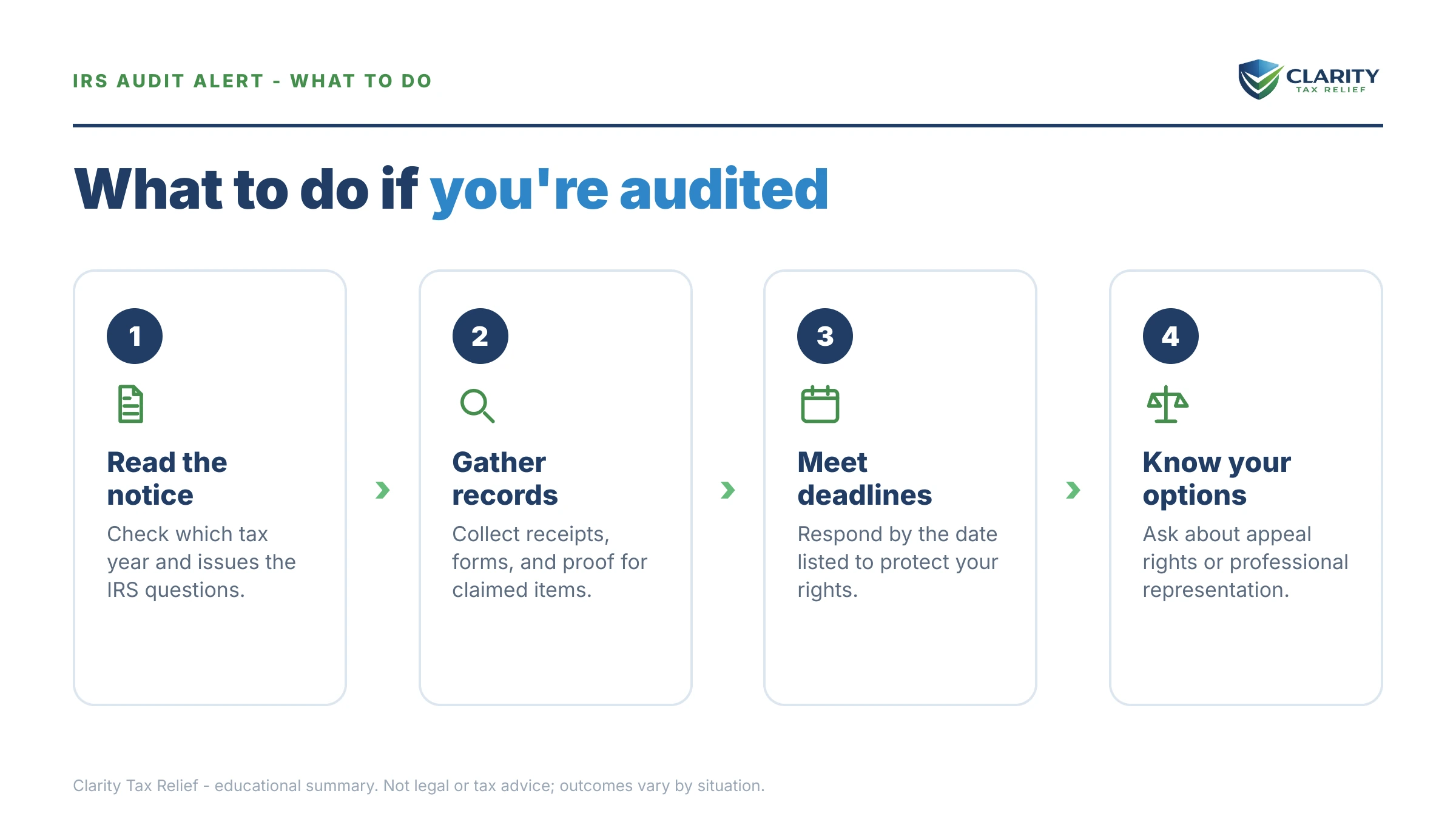
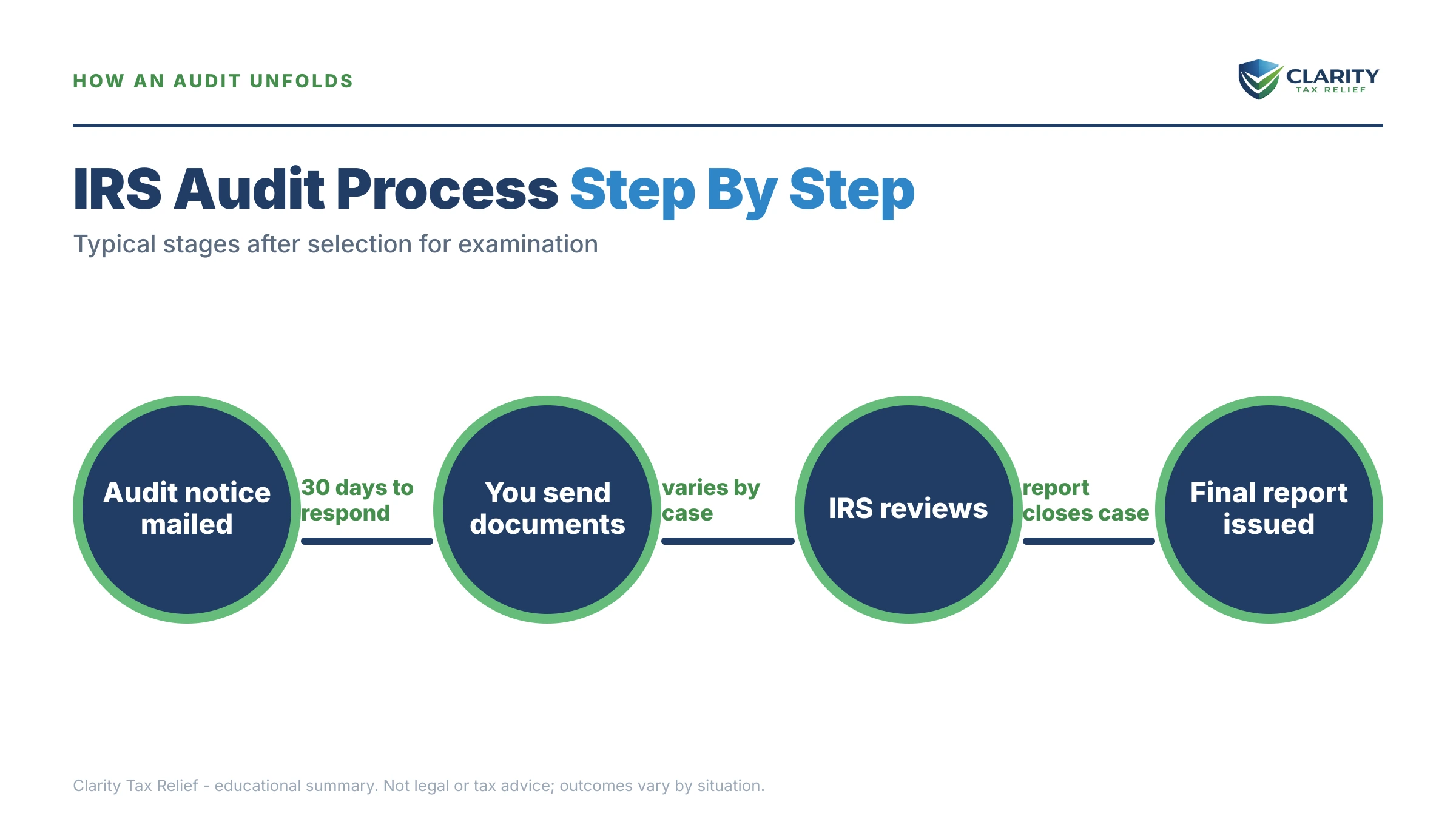
⏱ The clocks behind these numbers: none of these 2 million-plus cases had a single shared deadline — each runs on the date printed on its notice. A CP2000 typically gives you 30 days to respond; a statutory notice of deficiency gives you 90 days to petition Tax Court. After assessment, penalties and interest accrue monthly until the balance is resolved.

IRS FY2025 audit enforcement statistics: the headline numbers
The IRS closed 497,621 tax return audits in FY2025, recommending $26.8 billion in additional tax. That's the number that makes headlines, but it's the smallest of the three enforcement engines the agency ran last year.
The IRS closed 987,460 cases under the Automated Underreporter (AUR/CP2000) Program, resulting in $5.9 billion in additional assessments. It also closed 592,773 cases under the Automated Substitute for Return Program, resulting in nearly $2.9 billion in additional assessments. Combined, the two automated programs closed 1,580,233 cases — more than three times the number of traditional audits.
| Enforcement program | Cases closed (FY2025) | Additional tax | Roughly per case |
|---|---|---|---|
| Tax return audits (all types) | 497,621 | $26.8 billion recommended | ~$54,000 |
| Automated Underreporter (AUR / CP2000) | 987,460 | $5.9 billion assessed | ~$6,000 |
| Automated Substitute for Return (ASFR) | 592,773 | Nearly $2.9 billion assessed | ~$4,900 |
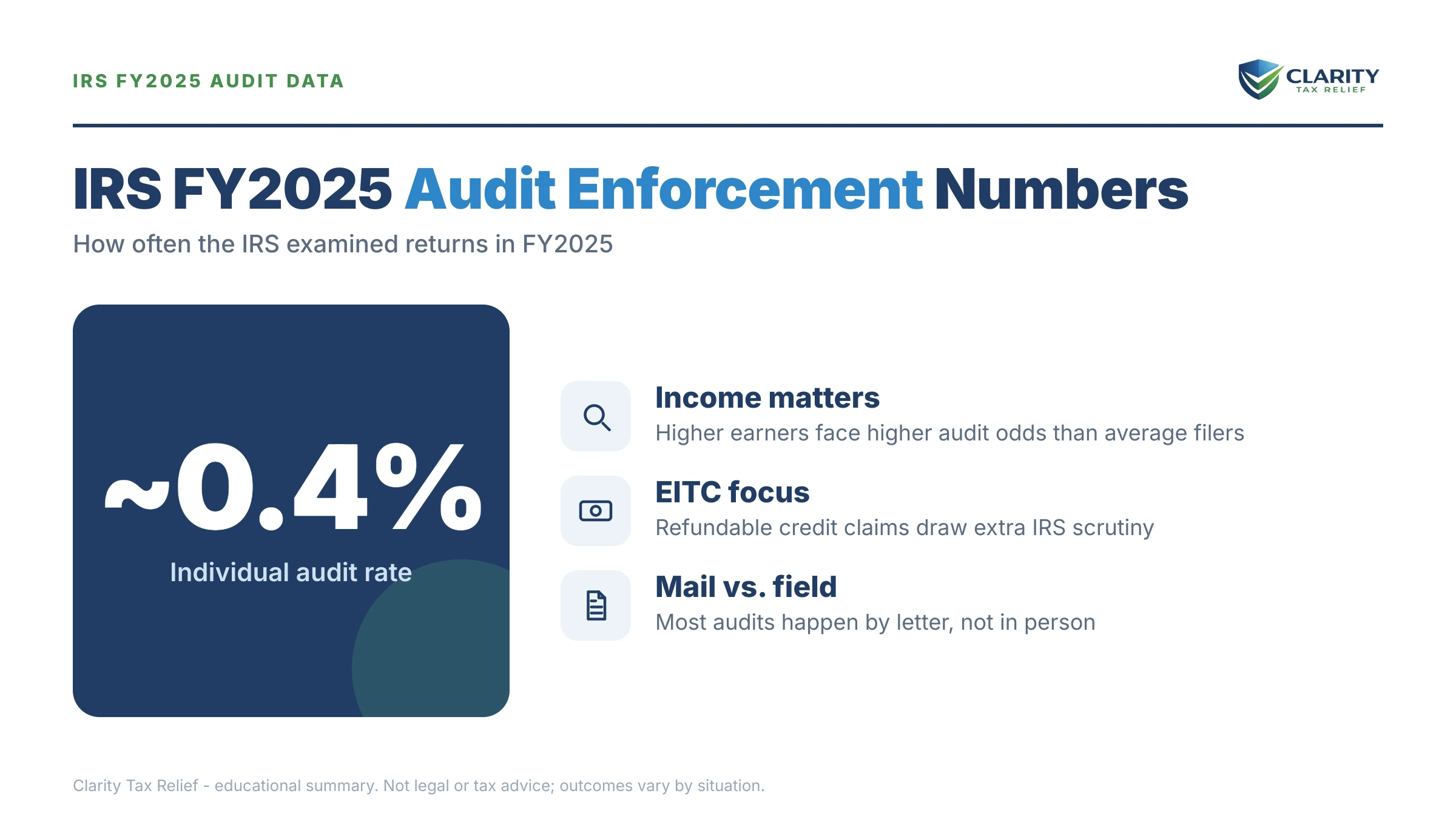
For scale: the IRS processed 271.4 million federal tax returns and supplemental documents in FY2025, including almost 162.8 million individual income tax returns, and revenue collected exceeded $5.3 trillion in FY2025. Set the 497,621 closed audits against 271.4 million processed returns and documents, and a traditional audit touched fewer than 2 in every 1,000 filings.
That low audit rate is exactly why so much coverage of "audit risk" misleads people. Add the automated cases and the picture changes: more than 2 million enforcement contacts in a single fiscal year, most of them generated without an examiner ever opening a file. Audit odds also vary enormously by income and return type — our breakdown of the irs audit rate by income shows how uneven that 2-in-1,000 average really is.
“Generally, the IRS can include returns filed within the last three years in an audit. If we identify a substantial error, we may add additional years. We usually don't go back more than the last six years.”
— IRS audits (IRS.gov)
The AUR program closed nearly twice as many cases as every audit combined
The Automated Underreporter program closed 987,460 cases in FY2025 — nearly double the 497,621 traditional audits — while assessing $5.9 billion in additional tax. AUR is pure document matching: a computer compares the W-2s, 1099s, and other information returns filed under your Social Security number against what your tax return reported. When something's missing, it mails a cp2000 notice proposing the additional tax, plus penalties and interest.
The per-case math is revealing. At $5.9 billion across 987,460 cases, the average AUR assessment ran roughly $6,000 per case — the kind of amount produced by one forgotten 1099-NEC, an early 401(k) withdrawal, or a brokerage account that generated a 1099-B nobody looked at. Audits, by contrast, averaged roughly $54,000 in recommended tax per case, because that pool includes massive corporate and high-income exams.
Two things about AUR that the raw numbers don't show. First, the proposed amount is frequently wrong in the IRS's favor — the computer sees gross proceeds, not your cost basis, business expenses, or rollovers, so disputing is often worth it (here's how a cp2000 disagree response works). Second, an ignored CP2000 doesn't go away; it converts into a legally binding assessment through the deficiency process. For a deeper cut of just this program's data, see our irs cp2000 underreporter statistics study.
What one AUR case looks like in dollars (hypothetical)
Say you and your spouse file jointly with $128,000 in combined wages, and a $19,000 1099-NEC from a side consulting project never made it onto the return. The AUR computer proposes roughly: $19,000 × 22% = $4,180 in income tax, plus self-employment tax of about $19,000 × 92.35% × 15.3% ≈ $2,685 — roughly $6,865 in additional tax. Add a 20% accuracy-related penalty of about $1,373, plus interest compounding from the original due date.
Notice what the computer left out: your mileage, software, phone, and home-office costs against that consulting income, which could shrink the taxable amount substantially. That's why blindly signing the agreement box is often the most expensive option. You can estimate how fast the penalty and interest side grows with our IRS Penalty & Interest Calculator.
Substitute for Return: 592,773 non-filers got a tax bill anyway
The Automated Substitute for Return program closed 592,773 cases in FY2025, assessing nearly $2.9 billion against people who never filed. When you don't file, the IRS eventually files for you — using every W-2 and 1099 it received, with zero deductions, zero credits. The least favorable filing status, typically single or married filing separately.
For a married couple, that last detail is brutal: an SFR won't give you joint brackets, your dependents, or your standard deduction structure, so the assessed balance is almost always higher than what an actual return would show. The fix is usually to file your own accurate return, which the IRS will generally process in place of its substitute — our guide to what happens when the irs filed a substitute return for me walks through it.
One more danger buried in this statistic: an SFR does not start the audit or collection statute clocks the way a filed return does. Until you file, the assessment window stays open indefinitely — the mechanics are covered in our hub on how far back can the irs audit.
Why FY2025 enforcement picked the people it picked
Almost every one of these 2 million-plus FY2025 cases started with a data mismatch, not a human suspicion. AUR and ASFR cases are triggered purely by third-party documents — a 1099 or W-2 the IRS has that your return doesn't reflect, or the absence of any return at all.
Traditional audits are selected differently: computer scoring that flags returns whose deductions or losses look statistically out of line, related-party pickups (your business partner or employer gets examined. Your return comes along), and targeted campaigns around specific issues. Increasingly, machine-learning models drive that scoring — our guide to irs ai audits explains how selection is changing in 2026. And most audits never involve a visit: the majority are letter-based exams run entirely by mail, covered in our irs correspondence audit guide.
The practical takeaway from the FY2025 data: the cheapest enforcement to trigger is a document mismatch. The cheapest to prevent is making sure every information return filed under your SSN shows up on your 1040.
How to spot FY2025 enforcement activity on your own transcript
Every one of these 2 million-plus cases leaves fingerprints on the taxpayer's IRS account transcript, often weeks before a letter arrives. If you suspect you're in one of these pipelines, pull your transcript and look for these codes:
| Transcript code | What it means | What to do |
|---|---|---|
| 424 | Examination request. Your return was referred for possible audit | Nothing yet; many 424s never become full exams. Organize records now. |
| 420 | Examination opened — a full audit is underway | Expect an exam letter; don't respond to anything until you've read it. See code 420 irs transcript. |
| 922 | Review of unreported income — the AUR program flagged a mismatch | A CP2000 may follow; pull your income documents now. See code 922 irs transcript. |
| 570 / 971 | Account hold plus a notice issued | Watch the mail; the 971 notice explains what's held and why. |
| 290 | Additional tax assessed — an enforcement result posted to your account | The proposal became real. Move to the resolution options below. |
What happens if you ignore an audit or AUR notice
An ignored enforcement notice doesn't stall. It converts into an assessed debt and then feeds straight into the collection machine. The sequence runs in stages, each one closing options the previous stage left open:
- Initial contact — a CP2000, exam letter (such as Letter 566), or SFR proposal. You can still dispute everything with documentation.
- Statutory notice of deficiency — a cp3219a notice of deficiency giving you 90 days to petition the U.S. Tax Court. Miss it and the proposed tax becomes final without a judge ever hearing your side.
- Assessment — the tax, accuracy penalty, and interest post to your account (that code 290 above).
- CP14 bill — the first collection notice, with roughly 21 days before the sequence escalates.
- CP501 / CP503 reminders → CP504 — the IRS can now take your state tax refund. A federal tax lien becomes a live possibility.
- LT11 final notice — a 30-day clock before wage garnishment and bank levies, with Collection Due Process rights you request on Form 12153.
The FY2025 data makes one thing clear about 2026: with the IRS workforce down roughly 27%, humans are harder to reach, but the automated notices, assessments, and levies never stopped. The machine escalates on schedule whether or not anyone answers the phone.
One of these 2 million cases has your name on it?
Whether it's a CP2000, an exam letter, or a substitute-return bill, the response window printed on your notice controls what's still fixable. Send it to us — an experienced tax professional will review it free and map your options before interest and penalties compound further.
Your options if FY2025 enforcement turned into a balance you owe
An assessed audit or AUR balance can be resolved through the same programs as any IRS debt, and disputed through a few that are unique to exam cases. Which door is open depends on the amount and your finances:
| Option | Who is eligible | Cost and key notes |
|---|---|---|
| Pay in full | Anyone | Stops interest and penalty accrual immediately; cheapest total cost. |
| Short-term payment plan | Balance payable within 180 days | $0 setup fee; interest and penalties continue until paid. |
| Guaranteed installment agreement | Individual income tax debt of $10,000 or less, with compliant filing history | Approval is required by law when the conditions are met; up to 3 years to pay. |
| Long-term installment agreement | Up to $50,000 — can be set up online over up to 72 months | Setup fee applies; interest and penalties keep accruing during the plan. |
| Currently Not Collectible | Financials show paying would prevent basic living expenses | Collection pauses; the debt remains and interest keeps growing. |
| Offer in Compromise | Assets plus future income genuinely can't cover the debt | $205 fee and 20% down on lump-sum offers (both waived with low-income certification at AGI ≤ 250% of poverty); the IRS accepted roughly 1 in 5 offers in FY2024. |
| Penalty abatement (FTA / AEP) | Clean compliance for the prior 3 years, or reasonable cause | Free to request; AEP makes some relief automatic starting summer 2026. |
| Audit reconsideration / appeal | New documentation, or an exam you disagree with | Free; can reopen a closed audit or SFR assessment with evidence. |
The exam-specific paths matter most here. If the assessment came from an audit you believe got it wrong, your irs audit appeal rights let you contest it before an independent appeals officer, and even after assessment, reconsideration can reopen the case with new records. If your problem is missing documentation rather than a wrong number, our guide to surviving an irs audit no receipts covers reconstruction methods the IRS actually accepts.
How to respond if FY2025 enforcement reached you, step by step
- Identify the program. Match your letter number (CP2000, Letter 566, CP3219A, CP59, or CP2566) to the program that generated it — the response path is different for each.
- Verify the IRS's numbers. Pull your irs wage and income transcript and compare every W-2 and 1099 against what the notice claims before agreeing to anything.
- Respond inside the printed window. Mail or upload your response by the date on the notice — agreeing, partially agreeing, and disputing each have their own checkbox and documentation.
- Request penalty relief. Ask for first-time abatement or reasonable-cause relief on any accuracy or late penalties. Starting summer 2026, some relief becomes automatic under AEP.
- Resolve any balance before it hits collections. Set up a payment plan, hardship status, or offer before the assessment turns into a CP14 and the collection notice sequence begins.
When you can handle this yourself, and when help changes the outcome
Plenty of FY2025's 987,460 AUR cases were resolvable at the kitchen table. If the CP2000 is simply right — you forgot a 1099, the math checks out. The total is one you can pay or put on a simple payment plan — you can check the agreement box, request penalty abatement yourself, and be done without paying anyone.
Experienced help earns its cost in the harder patterns the data hides: an audit expanding into multiple years, a substitute-return assessment built on missing returns you now need to reconstruct, self-employment or business income where the IRS's proposed figure ignores your expenses, a proposed accuracy or fraud penalty, or a deficiency notice with the 90-day Tax Court clock already running. In those cases, the order you fix things — returns first, then penalties, then the balance — often changes the final number by more than the fee.
One honest caution from the acceptance data: any company promising to make an assessed balance vanish is selling against the statistics, not with them. Resolution programs are real, but every one is means-tested.
Terms in the data, decoded
- Recommended additional tax — what examiners proposed when audits closed; it can still shrink through appeals or Tax Court before it's ever owed.
- Assessment — tax formally recorded on your IRS account; this is when a proposal becomes a collectible debt.
- AUR (Automated Underreporter) — the computer-matching program that compares your return to W-2s and 1099s and mails CP2000s.
- ASFR / SFR (Substitute for Return) — a return the IRS files for a non-filer, with no deductions or credits, producing an inflated balance.
- Statutory notice of deficiency — the "90-day letter" that is your last chance to contest proposed tax in Tax Court before assessment.
- Fiscal year (FY2025) — the federal accounting year ending September 30, 2025; these statistics cover that 12-month window, not the calendar year.
Not sure whether your notice is an audit, an AUR match, or something else entirely? Get a free review of the exact letter you're holding — the program it came from determines every deadline that follows.
FY2025 audit statistics: your questions, answered
How many audits did the IRS close in FY2025?
The IRS closed 497,621 tax return audits in FY2025, recommending $26.8 billion in additional tax. That figure covers every return type — individual, business, estate, and employment tax. It also understates total enforcement: automated programs closed another 1,580,233 cases the same year without a single traditional audit.
What were my odds of being audited in FY2025?
Low for a traditional audit: 497,621 closed audits against 271.4 million returns and documents processed works out to fewer than 2 in every 1,000. But your real exposure is roughly three times that once you add 987,460 CP2000 cases and 592,773 substitute-for-return cases. Odds also climb with unreported 1099 income, refundable credits, and very high incomes.
Is a CP2000 notice the same as an audit?
No — a CP2000 comes from the Automated Underreporter program, which matches your return against W-2s and 1099s by computer. It proposes additional tax rather than examining your records, and 987,460 of these cases closed in FY2025. It still becomes a legally enforceable assessment if you ignore the response window printed on the notice.
What is the Automated Substitute for Return program?
It is the program the IRS uses to file a return for you when you do not file one yourself. The IRS builds it from W-2s and 1099s with none of the deductions, credits, or dependents you would have claimed, which is why the balance is usually inflated. The program closed 592,773 cases in FY2025, assessing nearly $2.9 billion. Filing your own accurate return usually shrinks the bill.
How much does the average IRS audit or CP2000 case add in tax?
In FY2025, audits recommended roughly $54,000 in additional tax per case on average, while CP2000 cases assessed roughly $6,000 each. Averages are skewed upward by enormous corporate and high-income exams, so a typical individual case is smaller. What matters more is that recommended amounts are proposals. You can contest them before they become final.
Does IRS understaffing mean audits are stopping?
No. The IRS workforce shrank roughly 27% in 2025 and human-driven audits face pressure. But the underreporter and substitute-for-return programs are largely automated, and together they closed 1,580,233 cases in FY2025. Computer-generated notices, assessments, and the collection letters that follow keep running regardless of staffing.
How far back can the IRS audit me?
Generally three years from when you filed, extending to six years if you omitted more than 25% of your gross income. There is no time limit at all if you never filed or the IRS can show fraud — which is one reason substitute-for-return cases are so dangerous for non-filers. The clock never starts running until a return is actually filed.
Can I fight the result of an audit or CP2000?
Yes, at several stages. Before assessment you can respond with documentation, request an appeals conference, or petition the U.S. Tax Court within 90 days of a statutory notice of deficiency. After assessment, audit reconsideration lets you reopen the case with new information, and penalty abatement can remove penalties even when the tax itself stands.
What does recommended additional tax mean in IRS statistics?
It is the extra tax examiners proposed when audits closed, not necessarily what taxpayers ultimately paid. The $26.8 billion recommended in FY2025 shrinks in practice through appeals, Tax Court cases, and audit reconsideration. The AUR figures are labeled assessments because those cases close with tax actually placed on the account.
Your next 24 hours
- Find the letter number and response date on any IRS mail you've received — top or bottom right corner. That single code tells you which of these three programs has your file, and the date tells you what's still open.
- Gather three things: the notice itself, the tax return for the year it names, and every W-2 and 1099 you received that year — that's the exact data set the IRS matched against.
- Get a free case review at the 2-minute form or (888) 825-7779. Whether it's an audit, a CP2000, or a substitute-return bill, interest and penalties are compounding on the assessed amount every month it sits — the review costs nothing and tells you exactly where you stand.
Source: all FY2025 figures in this study come from the IRS's official compliance presence statistics. Payment options referenced above are detailed at IRS.gov/payments, and independent help for unresolved IRS problems is available through the Taxpayer Advocate Service. Per-case averages and combined totals are Clarity's calculations from the published figures.
This guide is general information, not tax or legal advice for your specific situation. Eligibility for IRS programs depends on individual facts and circumstances; no outcome is guaranteed.